 info@etcon.co.ua
 +38 (067) 343-78-59
What Affects the Cost of Electricity for Business?
The cost of electricity for business depends not only on the market price of electricity itself. The final amo...

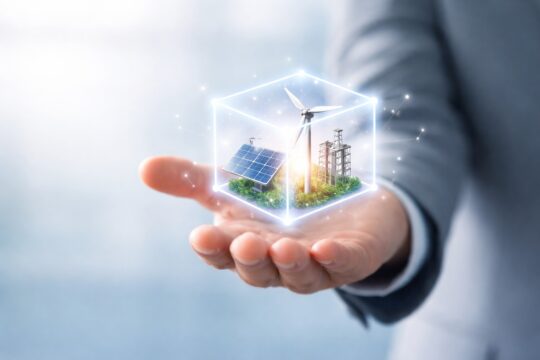
Renewable energy projects require not only technical implementation, but also systematic management of financial and infrastructure processes.
ENERGOTECH CONSULTING LLC provides comprehensive support and implementation of turnkey renewable energy projects — from preliminary analysis of connection possibilities to commissioning of the facility and its integration into the electricity market.
We approach the project as a comprehensive investment model, where technical solutions are aligned with regulatory requirements and economic feasibility.
Implementation begins with an assessment of the technical capabilities of connecting to electrical networks, including an analysis of the condition of external networks and obtaining technical specifications.
We provide:
The design stage determines the reliability and efficiency of the future energy facility. It is at this stage that compliance with regulatory requirements, technical parameters of the network, and conditions for further operation are established.
The project includes:
We ensure that technical solutions comply with regulatory requirements and safety standards.
The right choice of equipment is a key factor in the stability, efficiency, and long-term profitability of a renewable energy project. Technical solutions must meet not only the design parameters, but also the requirements of the system operator, operating conditions, and the financial model of the facility.
The company selects and supplies equipment based on technical characteristics, efficiency, and long-term reliability.
The choice of equipment is based on:
The final stage of project implementation is critical for its further stable operation and compliance with regulatory requirements. It is at this stage that the correctness of installation, equipment configuration, and readiness of the facility for integration into the network are verified.
We organize the necessary tests, ensure the preparation of protocols and acts for concealed works, and also monitor the compliance of technical parameters with the established requirements. Particular attention is paid to coordinating the results with the system operator and complying with the procedures for commissioning the facility.
This approach minimizes the risks of rejections, comments from regulators, and delays in project launch.
The implementation of the turnkey project provides:
The implementation of a generation facility forms the basis of an energy asset. However, in a volatile market with growing balancing requirements, this is no longer sufficient to ensure maximum efficiency.
The modern model of renewable energy involves the integration of energy storage systems (BESS), which increase asset flexibility, reduce the risk of imbalances, and generate additional sources of income.
That is why the next strategic stage of the project’s development is the implementation of accumulation systems and their correct integration into the market model.
ENERGOTECH CONSULTING LLC considers renewable energy projects as part of its long-term business development and energy independence strategy.
Energy storage systems (BESS) are becoming a key element of modern energy infrastructure. They help improve the stability of a facility’s operation, reduce the impact of imbalances, and optimize financial performance.
Our company provides comprehensive support for projects involving the implementation of storage systems, including:
BESS integration allows you to:
Integration into the electricity market (RDM / VDR)
The construction of a renewable energy source facility is only the first stage.
Then comes the main part — selling electricity on a competitive market.
In Ukraine, electricity is sold through organized market segments, including:
Day-ahead market (DAM) — when electricity is sold for the next day based on the results of an auction mechanism;
Intraday market (IDM) — where participants can adjust their purchase and sale volumes during the current day.
For the owner of the generation facility, this means that income is generated not simply “from production,” but from the right market strategy.
Why this is critically important
An incorrect market participation model can lead to:
Effective integration into the RDN and VDR allows:
We don’t just explain market mechanics — we shape the model of how an asset works within it.
Support includes:
Our task is to ensure not only that the facility is put into operation, but also that it operates efficiently and predictably in the market environment.
We integrate technical facilities into the financial logic of the market so that they function as controllable and profitable energy assets.
How it works in practice
Let’s imagine that a solar power plant generates electricity and sells it on the DAM without first analyzing its market strategy.
Inaccurate production forecasts lead to imbalances — the difference between the declared and actual volumes. This results in additional financial obligations, which can significantly reduce the project’s profitability.
As a result, the same object can demonstrate fundamentally different financial results, depending on the chosen market strategy.
What this means for the asset owner
The generation itself produces electricity.
But profit is generated through competent integration into the market.
That is why we work not only on the technical implementation of the project, but also on its market model — ensuring manageability, predictability, and long-term economic stability of the asset.
Order

The cost of electricity for business depends not only on the market price of electricity itself. The final amo...
Connecting to the power grid is one of the key steps in starting or growing a business. On the surface, it app...

The electricity market is a highly volatile environment characterized by complex rules and constant change. In...